
Table of Contents
Introduction: The Silent Sentinel of India
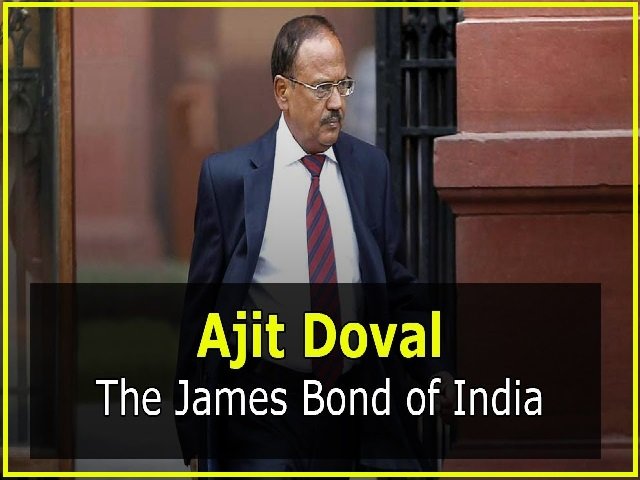
In the modern history of India, few individuals have worked so relentlessly behind the scenes while shaping the destiny of the nation’s security as Ajit Doval. Often referred to as India’s master spy, Ajit Doval is not a man who seeks public applause. His work thrives in silence, secrecy, and strategy. While politicians address crowds and soldiers guard borders, Ajit Doval has spent decades ensuring that threats to India are neutralized long before they reach the public eye.
This blog presents a deeply humanized and detailed account of Ajit Doval’s life—his birth, upbringing, education, intelligence career, personal sacrifices, daring missions, and his unwavering dedication to India. It is not merely a biography, but a journey into the mind of a man whose loyalty to the nation has defined his existence.
Birth and Roots: A Simple Beginning
Ajit Kumar Doval was born on January 20, 1945, in Ghiri Banelsyun village of Pauri Garhwal district, located in present-day Uttarakhand. Born into a modest yet disciplined family, his upbringing was rooted in values of integrity, simplicity, and patriotism. His father, Major G.N. Doval, served in the Indian Army, and this military environment played a profound role in shaping Ajit Doval’s worldview.
Growing up in the hills of Uttarakhand, young Ajit was exposed to a life of resilience. The rugged terrain, limited resources, and close-knit communities instilled in him a strong sense of adaptability and emotional strength. These early years laid the foundation for the calm, analytical, and fearless personality that he would later become known for.
Early Life and Character Formation
Ajit Doval’s childhood was not marked by luxury, but by discipline and curiosity. As the son of an army officer, he frequently moved across regions, learning to adapt quickly to new environments. This constant change sharpened his observational skills and taught him how to blend into different social settings—an ability that would later become critical in his intelligence career.
Teachers and peers often described him as intelligent, quiet, and deeply observant. He was not someone who spoke unnecessarily, but when he did, his words carried clarity and purpose. Even in his formative years, Ajit Doval showed a natural inclination toward understanding people, behavior, and systems rather than seeking attention.
Education: Building the Intellectual Arsenal
Ajit Doval pursued his higher education at Agra University, where he completed his Master’s degree in Economics. His choice of economics was not accidental. Understanding economic structures, resource flows, and societal dynamics later helped him analyze geopolitical conflicts from a broader strategic lens.
Unlike many intelligence officers who come from overt military backgrounds, Doval combined academic intelligence with street-level awareness. His education sharpened his analytical thinking, enabling him to decode complex political and social environments with precision.
Entry into Civil Services: The Making of an Intelligence Officer
In 1968, Ajit Doval entered the Indian Police Service (IPS), belonging to the Kerala cadre. This marked the formal beginning of his journey into national security and intelligence. His early postings exposed him to law enforcement challenges at the grassroots level, giving him first-hand experience in dealing with insurgency, crime, and social unrest.
What distinguished Ajit Doval early on was his willingness to go beyond files and reports. He believed that intelligence gathered from the ground, through personal interaction and immersion, was far more valuable than distant analysis. This philosophy later defined his legendary intelligence operations.
Early Career and Intelligence Training
Ajit Doval was inducted into the Intelligence Bureau (IB), India’s premier internal intelligence agency. From the beginning, his superiors recognized his extraordinary ability to understand hostile environments. He was trained in counter-insurgency, psychological operations, and covert intelligence gathering.
Unlike conventional officers, Doval often worked undercover, living among hostile groups without revealing his identity. He mastered local languages, adopted cultural nuances, and gained the trust of those who would otherwise be inaccessible to Indian intelligence.
Life as a Spy: Living in the Shadows
One of the most remarkable aspects of Ajit Doval’s career was his extended undercover operations in Pakistan. He lived there for nearly seven years, posing as a common civilian. During this time, he gathered crucial intelligence on Pakistan’s military and intelligence establishments.
Living in enemy territory required not just courage, but extraordinary mental discipline. One wrong word, one misplaced gesture, could have cost him his life. Yet, Doval navigated these dangers with composure, proving that intelligence warfare is as much about psychological strength as it is about information.
Role in Counter-Insurgency Operations
Ajit Doval played a decisive role in counter-insurgency operations in Punjab during the peak of militancy in the 1980s. His strategy was unconventional but effective. Instead of relying solely on force, he focused on intelligence penetration, psychological dominance, and dismantling insurgent support systems.
His role in Operation Black Thunder remains legendary. By weakening militant morale and isolating them from public support, Doval ensured the operation’s success with minimal collateral damage.
Personal Life: The Man Behind the Mission
Despite his intense professional life, Ajit Doval has always maintained a low-profile personal life. He is married and has children, but he has consciously kept his family away from public attention. This separation between personal and professional spheres reflects his belief that national duty must never endanger loved ones.
Those close to him describe him as deeply spiritual, disciplined, and emotionally grounded. He is known to practice yoga and meditation, methods that help him maintain mental clarity amid immense pressure.
Dedication Towards the Nation
For Ajit Doval, national security is not a job—it is a lifelong commitment. He has consistently emphasized that India must adopt a proactive security doctrine rather than a reactive one. His belief is simple: deterrence through strength ensures peace.
His strategic thinking has reshaped India’s approach to terrorism, border security, and internal stability. He advocates neutralizing threats at their source rather than waiting for attacks to occur.
Becoming National Security Advisor
In 2014, Ajit Doval was appointed as India’s National Security Advisor (NSA), marking a historic moment as he was the first NSA with a direct intelligence background. His appointment signaled a shift toward a more assertive and intelligence-driven national security policy.
As NSA, he has played a crucial role in shaping India’s responses to terrorism, border tensions, and global strategic challenges.
Major Achievements and Strategic Operations
Ajit Doval’s tenure has been marked by decisive actions, including strategic counter-terror operations and diplomatic-security coordination. His influence was evident in India’s firm stance on national security matters and its willingness to act in defense of sovereignty.
He has also been instrumental in strengthening intelligence coordination between agencies and improving crisis response mechanisms.
Undercover Intelligence Operations in Pakistan (1970s–1980s)
Nature of Operation: Deep-cover human intelligence (HUMINT)
Role: Long-term undercover operative
Ajit Doval lived in Pakistan for nearly seven years under a false identity, blending into local society as a civilian. During this period, he gathered critical intelligence on Pakistan’s military establishments, internal security mechanisms, and strategic thinking. Operating without diplomatic cover, this mission required extraordinary psychological endurance and cultural assimilation. It remains one of the longest and most dangerous undercover missions undertaken by an Indian intelligence officer.
Operation Black Thunder (1988)
Nature of Operation: Counter-terrorism and intelligence-led assault
Role: Chief intelligence strategist
Operation Black Thunder was conducted to eliminate heavily armed militants occupying the Golden Temple complex in Amritsar. Ajit Doval penetrated militant ranks by posing as a supporter, gaining their trust and mapping their morale, supply lines, and weaknesses. His intelligence inputs allowed Indian forces to neutralize terrorists with minimal civilian casualties, avoiding damage to the sacred shrine. This operation is widely regarded as a model of intelligence-driven counter-terrorism.
Punjab Counter-Insurgency Strategy (1980s–Early 1990s)
Nature of Operation: Psychological and intelligence warfare
Role: Strategic planner and field intelligence leader
Beyond a single mission, Ajit Doval played a decisive role in dismantling Khalistani militancy across Punjab. His approach focused on breaking the insurgents’ support ecosystem—finances, propaganda, recruitment, and public sympathy—rather than relying solely on force. This long-term strategy contributed significantly to restoring peace in the state.
Aviation Security Reforms After IC-814 Hijacking (1999)
Nature of Operation: Crisis response and systemic security reform
Role: Crisis manager and policy architect
Following the hijacking of Indian Airlines flight IC-814, Ajit Doval was deeply involved in restructuring India’s aviation and counter-hijacking security framework. His recommendations led to improved airport security, intelligence coordination, and crisis negotiation protocols, strengthening India’s preparedness against similar threats.
Covert Intelligence Operations in Jammu & Kashmir
Nature of Operation: Counter-insurgency and infiltration control
Role: Intelligence leadership and strategic oversight
Ajit Doval contributed extensively to intelligence operations aimed at disrupting terrorist infiltration networks in Jammu and Kashmir. His focus was on human intelligence, local engagement, and cutting off cross-border support systems. These efforts strengthened India’s internal security framework in sensitive regions.
Strategic Security Operations as National Security Advisor (Post-2014)
Nature of Operation: National-level security coordination and strategic deterrence
Role: National Security Advisor
As NSA, Ajit Doval oversaw and coordinated multiple high-level security responses, emphasizing proactive deterrence, intelligence dominance, and inter-agency coordination. His tenure marked a decisive shift toward pre-emptive security measures and stronger national response mechanisms.
Major Awards, Medals, and Honors
Kirti Chakra (1988)
Awarded for exceptional gallantry and courageous service during counter‑terrorism operations in Punjab, particularly his pivotal intelligence role in Operation Black Thunder. Ajit Doval’s undercover penetration of militant networks, psychological operations, and strategic guidance helped neutralize terrorism inside the Golden Temple complex with minimal civilian casualties. The Kirti Chakra is India’s second-highest peacetime gallantry award.
Padma Vibhushan (2019)
Conferred for exceptional and distinguished service to the nation in the field of public affairs and national security. This award recognized Ajit Doval’s decades-long contribution to India’s internal security, intelligence reforms, counter‑terrorism strategy, and his transformative role as National Security Advisor in strengthening India’s strategic posture.
These honors reflect not only personal bravery but also Ajit Doval’s long-term impact on India’s security architecture. True to his character, he has consistently downplayed individual recognition, emphasizing that national security achievements are always collective efforts.
Key Achievements (2004–2014): Intelligence Leadership Before NSA Role
During the period from 2004 to 2014, Ajit Doval was not a public figure, yet his influence within India’s security and intelligence ecosystem was substantial. This decade was marked by his transition from active intelligence operations to institutional and strategic leadership.
Director, Intelligence Bureau (2004–2005)
Ajit Doval served as the Director of the Intelligence Bureau, India’s premier internal intelligence agency. During this period, he focused on strengthening internal security mechanisms, improving intelligence analysis, and enhancing coordination between central and state intelligence units. His tenure emphasized actionable intelligence over passive reporting.
Strengthening Counter-Terror Intelligence Architecture
In the aftermath of major terror incidents in the early 2000s, Doval contributed significantly to refining India’s counter-terror intelligence framework. He emphasized human intelligence networks, early threat detection, and inter-agency cooperation, helping India better anticipate and disrupt terror modules.
Founding Director, Vivekananda International Foundation (2009)
After retirement from active service, Ajit Doval established the Vivekananda International Foundation (VIF), a strategic think tank in New Delhi. Under his leadership, VIF became a key platform for national security discourse, policy research, and strategic planning, bridging the gap between intelligence experience and policy formulation.
Strategic Advisor on Internal Security
Between 2005 and 2014, Ajit Doval served as an informal yet influential advisor on internal security matters. His insights shaped discussions on counter-insurgency, terrorism, and intelligence reforms, even while he remained outside formal government positions.
Key Achievements (2014–2025): Transformational Era as National Security Advisor
The period from 2014 to 2025 represents the most visible and transformative phase of Ajit Doval’s career, during which he served as India’s National Security Advisor. This era fundamentally reshaped India’s national security posture.
Appointment as National Security Advisor (2014)
Ajit Doval’s appointment as NSA marked the first time an intelligence professional assumed this role. This shift brought operational realism, intelligence depth, and strategic clarity into India’s highest security decision-making body.
Proactive National Security Doctrine
One of his most significant achievements was the articulation and implementation of a proactive security doctrine. Under his guidance, India moved from reactive counter-terrorism to preventive and deterrence-based strategies, focusing on neutralizing threats at their origin.
Strengthening Inter-Agency Coordination
Doval played a central role in improving coordination between intelligence agencies, the armed forces, and diplomatic channels. This integration reduced response times, improved situational awareness, and enabled cohesive national security actions.
Counter-Terror and Internal Security Consolidation
Between 2014 and 2025, India witnessed a more structured approach to internal security, including enhanced border management, intelligence-led operations, and disruption of terror financing networks. Ajit Doval’s strategic oversight was crucial in aligning operational execution with national objectives.
Strategic Crisis Management and Diplomatic-Security Integration
As NSA, Doval became the principal crisis manager during sensitive national security situations. He effectively integrated diplomacy with security strategy, ensuring that India’s external engagements were backed by credible intelligence and deterrence capability.
Elevation to Cabinet Rank (2019)
In recognition of his expanded responsibilities and influence, Ajit Doval was accorded Cabinet Minister rank in 2019. This institutional elevation reflected the central role national security had assumed in India’s governance framework.
Long-Term National Security Vision (2020–2025)
During this period, Ajit Doval focused on building long-term resilience—emphasizing self-reliance, technological capability, cybersecurity awareness, and strategic preparedness to face evolving global and regional threats.
Vision and Aim for the Nation
Ajit Doval envisions an India that is strong, secure, and self-reliant. His strategic philosophy emphasizes internal stability, economic strength, and technological advancement as pillars of national security.
He believes that a secure nation empowers its citizens to thrive without fear. His long-term aim is to ensure that India remains resilient against both conventional and unconventional threats.
India’s Security Doctrine: Before and After Ajit Doval
To truly understand Ajit Doval’s impact, one must examine how India’s security doctrine evolved before and after his rise to prominence. Prior to his influence, India largely followed a reactive security approach. The nation responded to threats after damage had already occurred, relying heavily on diplomacy, defensive postures, and prolonged deliberation. While this approach aligned with India’s moral and democratic values, it often allowed adversaries to exploit hesitation and bureaucratic inertia.
Before Ajit Doval, intelligence agencies often worked in silos. Information sharing was limited, response times were slow, and political leadership frequently depended on post-event assessments rather than pre-emptive action. Terror attacks and insurgent activities were treated as law-and-order problems instead of strategic warfare.
After Ajit Doval assumed key roles, especially as National Security Advisor, India’s security doctrine underwent a decisive transformation. The focus shifted from reaction to prevention, from defensive caution to calculated assertiveness. Doval introduced the principle that national security threats must be neutralized at their source. This doctrine emphasized intelligence dominance, strategic deterrence, and psychological superiority over adversaries.
Under his influence, intelligence coordination improved significantly. Agencies began functioning with unified objectives, real-time intelligence sharing, and mission-oriented execution. India’s posture evolved into one that clearly communicated strength, resolve, and readiness, altering how adversaries calculated risks.
This shift did not abandon diplomacy; instead, it strengthened it. Ajit Doval’s doctrine ensured that diplomacy was backed by credible security capability, making negotiations more balanced and effective.
The Philosophy of Intelligence Warfare: Ajit Doval’s Strategic Mindset
Ajit Doval’s understanding of intelligence warfare goes far beyond espionage and covert operations. For him, intelligence is the art of shaping outcomes without open conflict. He has consistently emphasized that the greatest victories are those achieved without firing a bullet.
According to Doval’s philosophy, intelligence warfare operates on three critical levels: information dominance, psychological impact, and strategic timing. Gathering information alone is meaningless unless it is accurate, timely, and actionable. Doval believed that intelligence must flow from the ground up, rooted in human sources and cultural understanding, not merely technological surveillance.
Psychological impact forms the second pillar of his philosophy. Doval understood that weakening the morale, unity, and confidence of adversaries is often more effective than physical confrontation. By infiltrating hostile networks, influencing narratives, and isolating extremists from public support, he demonstrated how intelligence could dismantle threats internally.
The third pillar—strategic timing—reflects his belief that action must be precise and purposeful. Acting too early or too late can both be disastrous. His operations were known for their patience, often waiting years until conditions were perfect. This patience separated him from impulsive decision-making and reinforced his reputation as a master strategist.
For Ajit Doval, intelligence warfare is also deeply ethical. He has maintained that the objective is not destruction, but stability. His approach seeks to protect innocent lives, preserve national integrity, and prevent prolonged conflict.
Leadership Lessons from Ajit Doval’s Life
Ajit Doval’s life offers profound leadership lessons that extend far beyond intelligence and national security. His leadership style is rooted in discipline, clarity of purpose, and selflessness.
One of the most significant lessons from Doval’s journey is the power of silent leadership. He demonstrates that true leaders do not need constant visibility or public validation. Results, not recognition, define effective leadership.
Another key lesson is adaptability. From living undercover in hostile territory to managing high-level strategic decisions, Doval adapted seamlessly to changing circumstances. He teaches that rigid thinking is the enemy of success, especially in complex environments.
Decision-making under pressure is another hallmark of his leadership. Ajit Doval is known for calm, calculated decisions even during crises. He separates emotion from strategy, ensuring that actions are guided by long-term national interest rather than short-term reactions.
Integrity and loyalty form the moral backbone of his leadership. Throughout his career, Doval has remained steadfast in his commitment to India, resisting personal ambition and external influence. His life reminds leaders that credibility is built through consistency and ethical conduct.
Finally, Ajit Doval exemplifies servant leadership. His entire career reflects service to the nation above personal comfort, family time, and public acclaim. This mindset inspires trust, unity, and resilience within institutions.
Conclusion: A Life Dedicated to Bharat
Ajit Doval’s life is a testament to silent sacrifice and unwavering patriotism. In an age of instant fame and constant visibility, he represents a rare form of leadership that operates without applause. His journey—from a small village in Uttarakhand to the highest echelons of national security—embodies discipline, courage, and intellectual brilliance.
Through his transformation of India’s security doctrine, his deep philosophy of intelligence warfare, and his exemplary leadership values, Ajit Doval has left an indelible mark on the nation. He is not merely a strategist or administrator, but a guardian of India’s sovereignty.
Ajit Doval’s legacy will continue to shape India’s national security framework for generations to come, standing as a powerful reminder that the strongest defenders of a nation are often those who work silently, guided only by duty and love for Bharat.
Sources : indianmasterminds.com .